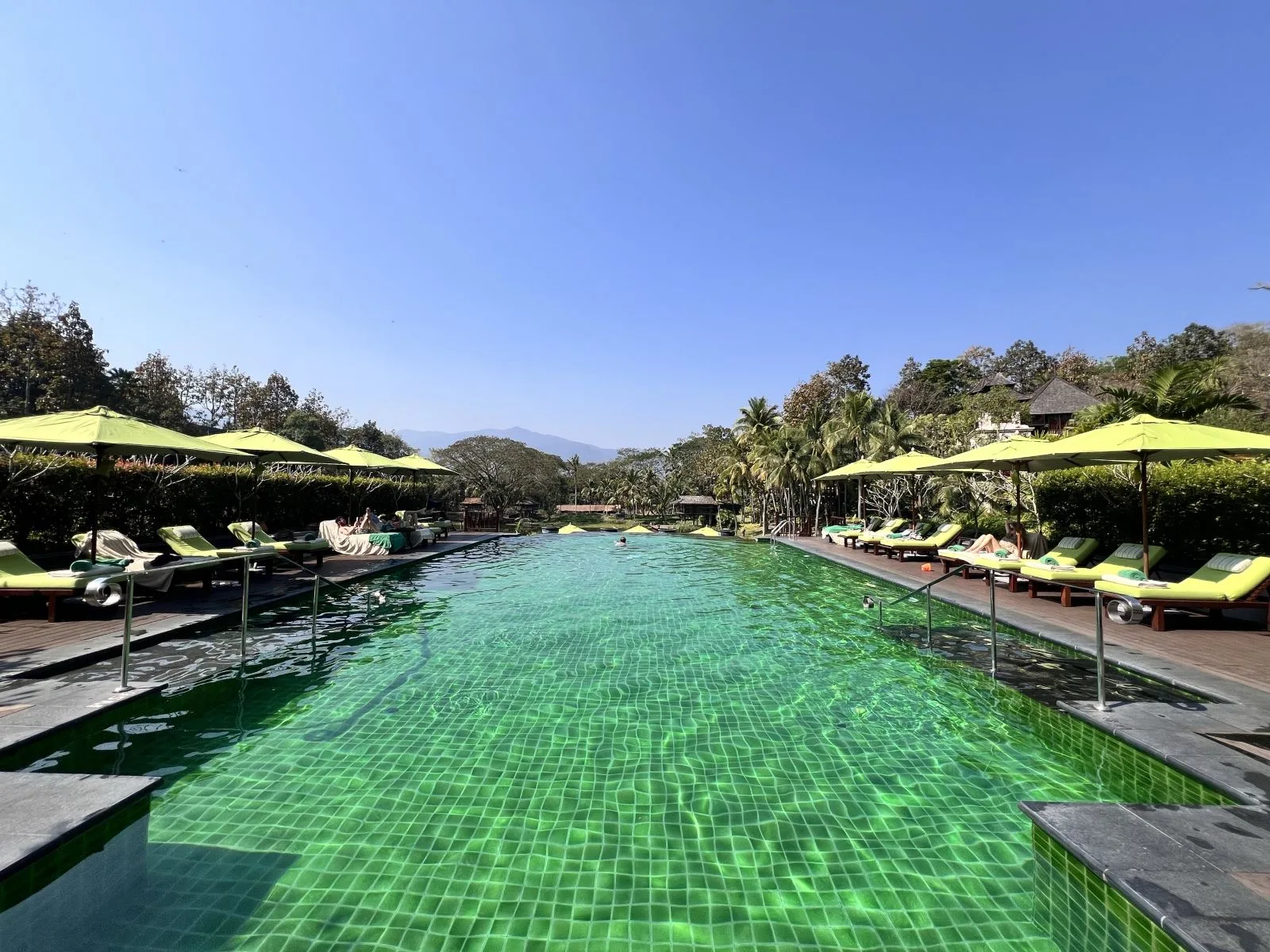
Most first visits to Chiang Mai get booked inside the moat, close to the temples and the night bazaar. It is the obvious choice, and for a two-night stop it is the right one. But the north's best rooms are not there. They are half an hour out, in the Mae Rim valley, where the land opens into working rice terraces and the hills begin.
The Valley, Not the City
The distinction matters more here than in Bangkok or Phuket. In the city you are buying a location. In the valley you are buying the view, the quiet and the temperature — Mae Rim runs noticeably cooler than the plain, and the difference is felt most in the hot months.
The Benchmark
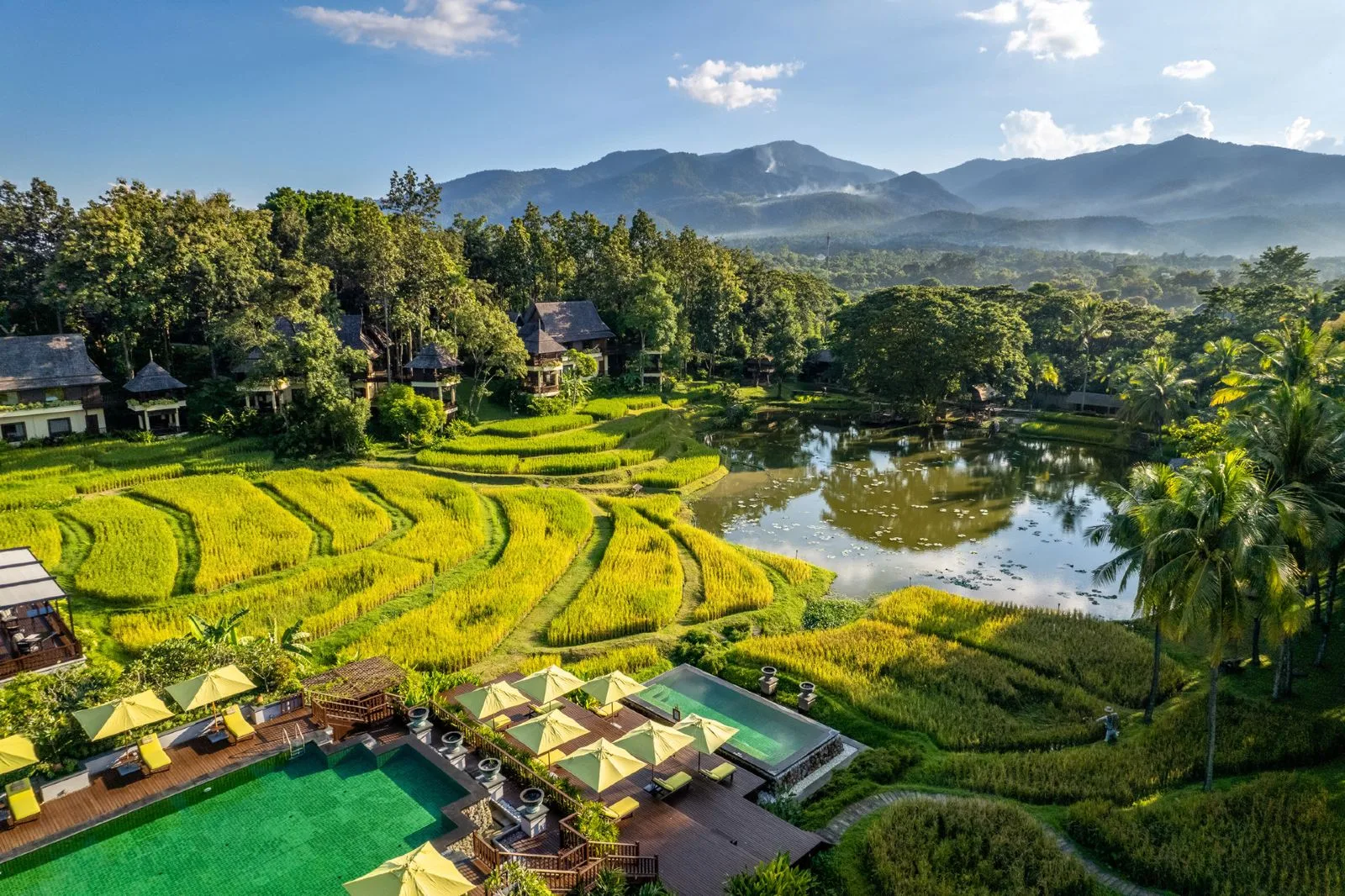
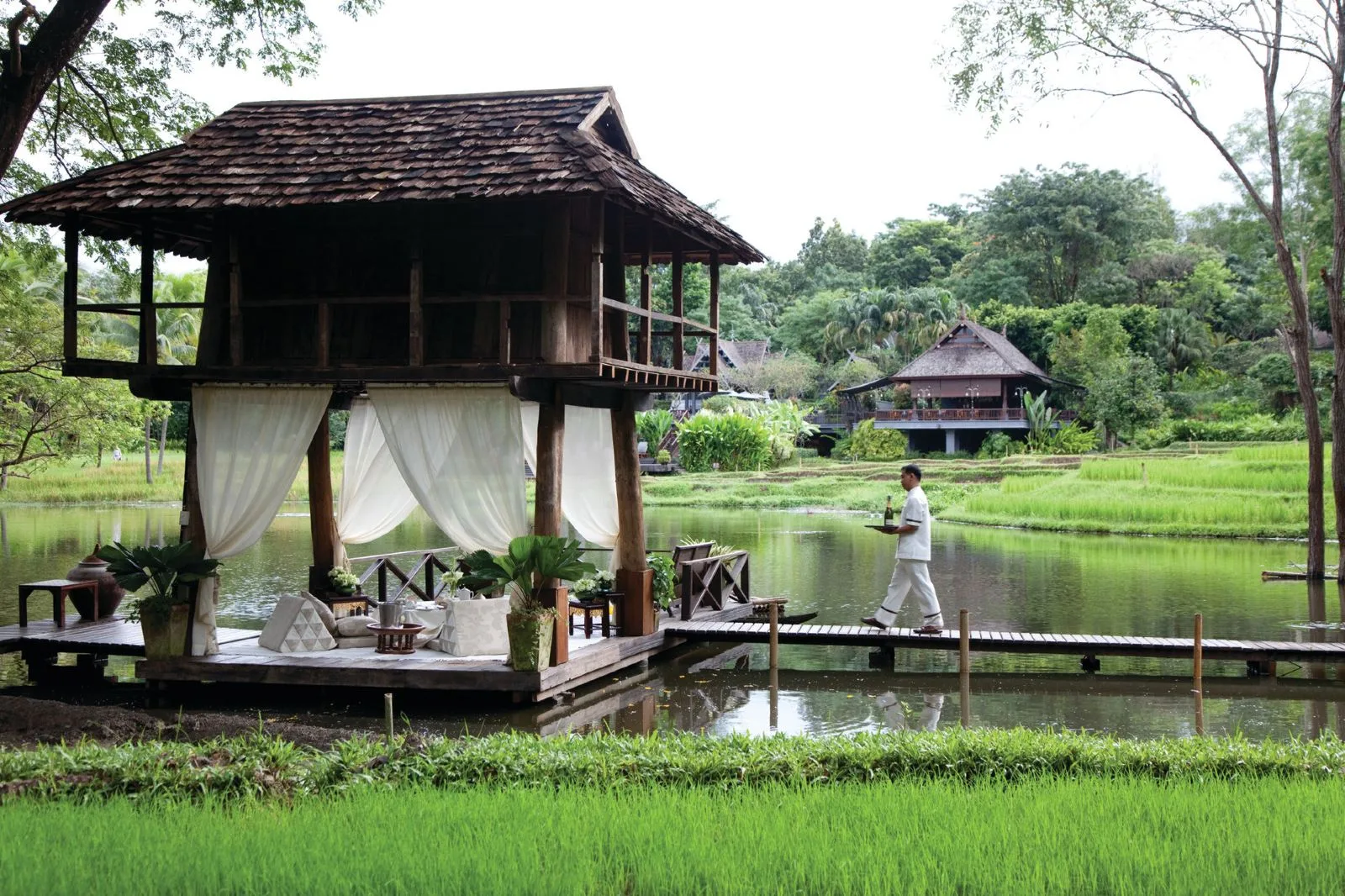
Twenty acres of the valley, arranged around rice terraces that are genuinely worked — planted, flooded and harvested through the year. The architecture is deliberately low: Lanna pavilions on stilts, teak, lily ponds, and nothing tall enough to interrupt the line of the hills. Four Seasons Chiang Mai has been named among Thailand's best by the readers of Travel + Leisure, which is a useful data point but not the reason to go.
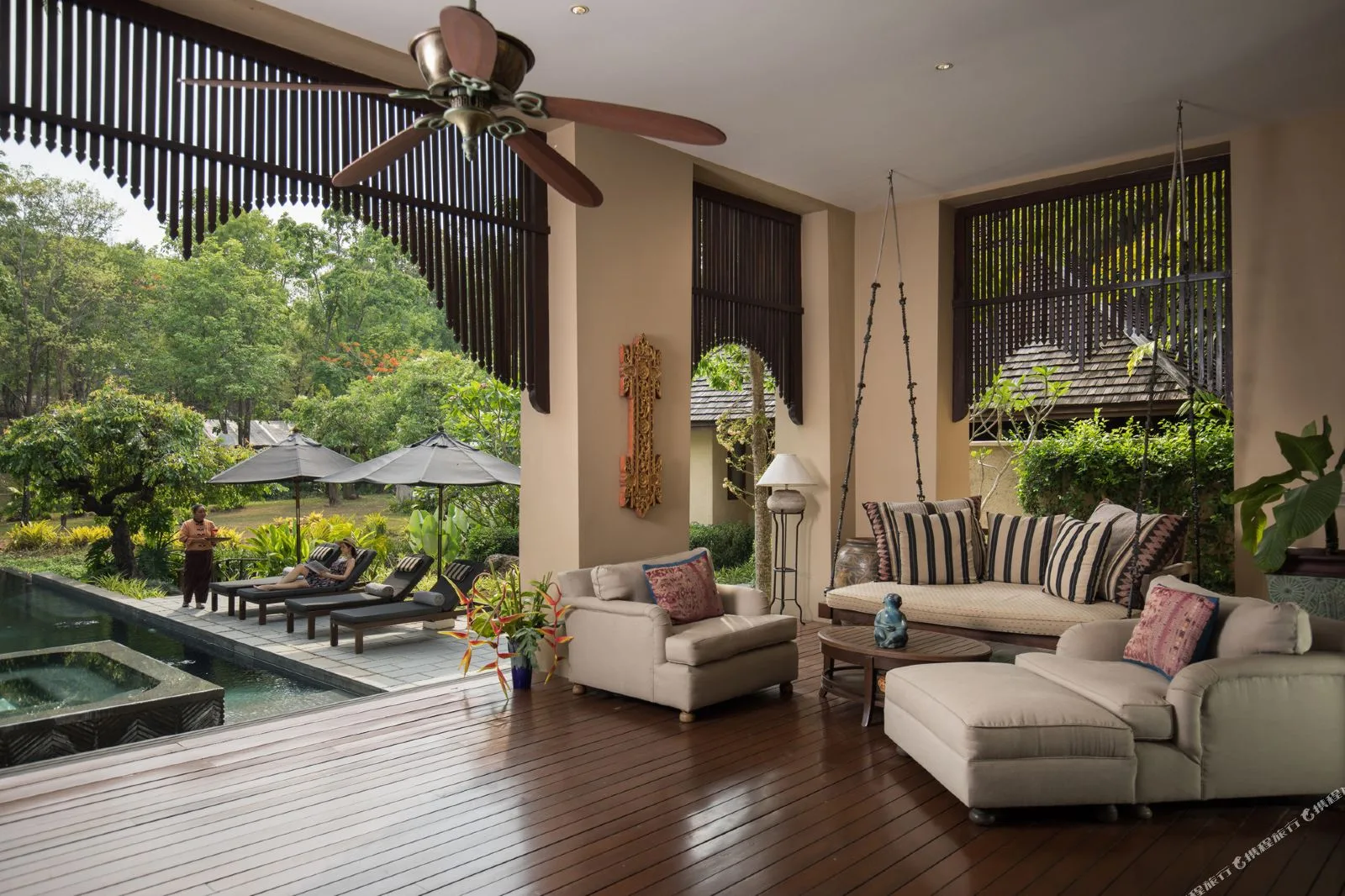
Accommodation divides into three tiers, and choosing between them is the main decision you will make here. Pavilion suites sit on stilts above the paddy with open-sided living rooms — the entry point, and for most people the right one. Villas add private plunge pools and enclosed gardens. Residences are multi-bedroom, with kitchens and staff support, built for stays measured in weeks.
Book a pavilion suite for a first visit — the villas only pay off if you intend to spend days on the property rather than in the city.
What the Spas Actually Do Here
Northern Thailand treats wellness differently from the islands. On Samui and in Phuket the spa is usually an add-on to a beach holiday. In the Mae Rim valley it tends to be the reason people book, and the programmes are built accordingly — naturopathic consultations, multi-day plans, and treatment salas set out over the fields rather than in a windowless basement.
The plant-forward kitchen is part of the same thinking, and it sits next to a restaurant that cooks northern Thai food properly rather than apologetically. You can eat well here without committing to a wellness programme, and commit to one without eating badly — which is rarer than it sounds.
When the Valley Is at Its Best
The terraces are green and flooded through the rainy months and gold before the harvest; both are worth seeing, and they photograph completely differently. The cool season brings the clearest air and the lowest night temperatures, and it is also when the valley fills up — book further ahead than you think you need to.
The one period to check carefully is the burning season across the wider region, when air quality in the north can drop sharply. It varies year to year, so look at current readings rather than trusting a calendar. Outside it, Mae Rim is one of the few places in Thailand where you will want a jacket in the evening.
The valley lies north-west of Chiang Mai, roughly thirty minutes from the old town and about forty from the airport. If you plan to move between city and valley more than once a day, a car with a driver works out simpler than repeated taxis. Other options in the area worth knowing: Anantara Chiang Mai on the river in town, and Raya Heritage for rooms furnished by northern artisans.