In 2007 Ritz-Carlton announced that it was building something it had never built before. Not another city tower and not another beach resort, but a separate collection of small properties in what the company called hand-selected hideaways — places chosen for landscape and local culture rather than for the size of the ballroom. The category was named Reserve. The first one was supposed to open in the Caribbean.
It opened in Thailand instead, and the reason it did says a good deal about how the last two decades of luxury travel actually unfolded. Forbes Travel Guide has just retold that story in detail, and it is worth reading alongside this one.
The Caribbean plan that never happened
The plan announced by the late Ritz-Carlton chief operating officer Simon F. Cooper put the inaugural Reserve at Molasses Reef on West Caicos, in the Turks and Caicos. Then the 2008 financial collapse arrived, construction money evaporated across the Caribbean, and the project stalled.
Meanwhile, on a rocky promontory in Krabi, a Thai project that had been in development since 2003 was nearly finished. In December 2009 it opened as Phulay Bay, a Ritz-Carlton Reserve — the first of the category anywhere in the world. A brand conceived for the Caribbean made its debut on the Andaman coast, and every Reserve that followed was measured against what had been built in Thailand.
The market it opened into
Thailand was not an obvious place to test a new idea about luxury, because the country already had a crowded top end. The Mandarin Oriental had been taking well-heeled guests in Bangkok since 1876. The very first Aman opened on a Phuket headland in 1988 and rewrote what a resort could be. Banyan Tree arrived in Phuket in 1994, and Six Senses, Four Seasons and others had planted flags of their own.
That is the useful context for what Ritz-Carlton did next. Reserve was not arriving to teach Thailand about luxury — it was arriving into the most competitive luxury market in Asia and had to justify a new name in front of an audience that already knew exactly what a great Thai resort felt like.
What a Reserve actually is
The differences are deliberately small in number and large in effect. There is no front desk: guests are checked in from an iPad, wherever they happen to be standing. Each villa comes with a personal butler, called ton hong in Thai, who handles everything from unpacking to dinner reservations. The scale stays low, the buildings stay under the treeline, and the design is expected to argue for the place it sits in rather than for the brand.
That last point is the whole thesis of Reserve, and it is why the collection has grown so slowly: nine properties worldwide in sixteen years. Ritz-Carlton opens more hotels than that in a good year.
The headland, and who built on it
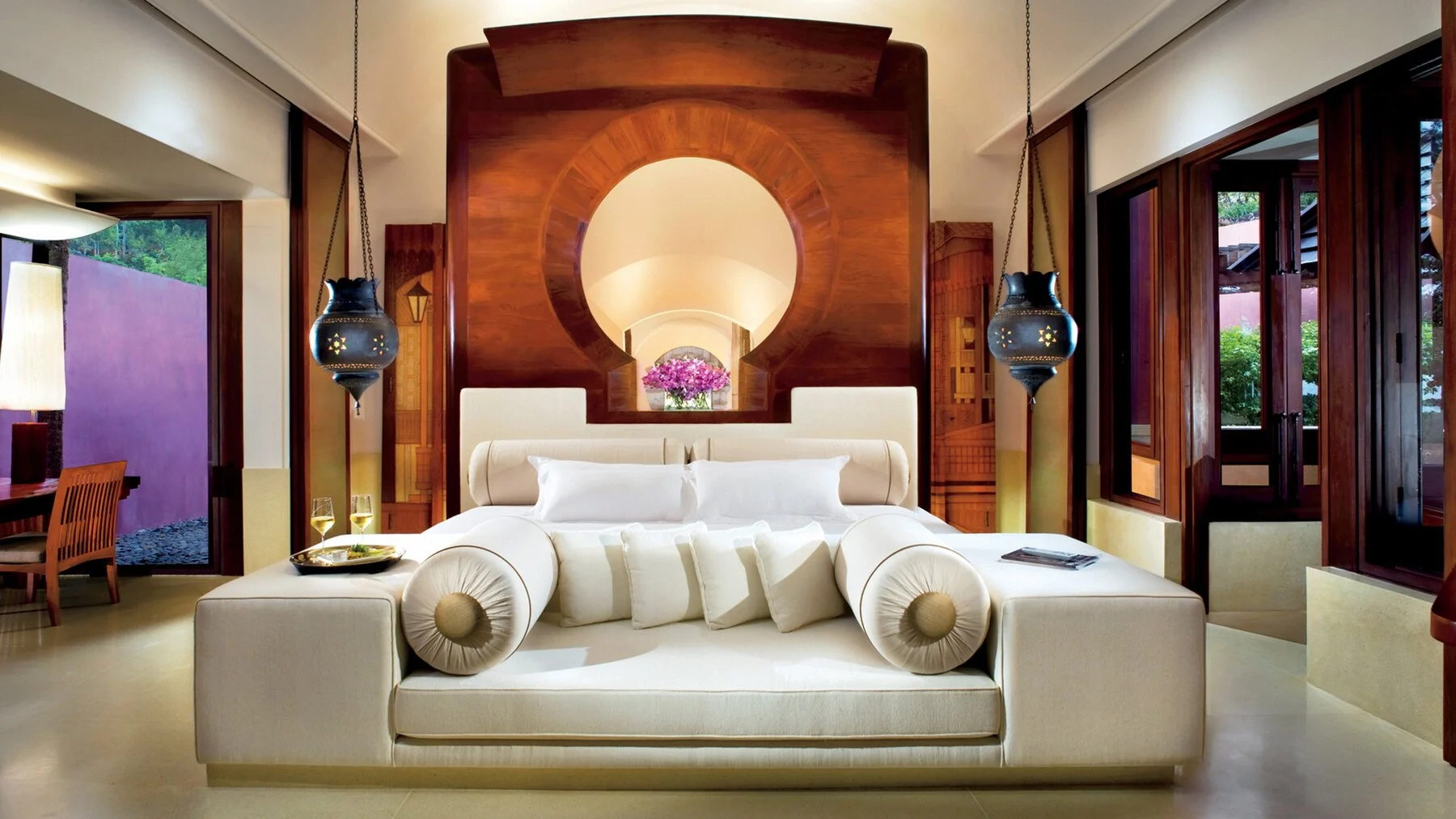
The land belongs to Piya Bhirombhakdi, of the family behind Singha, who began developing the headland in the mid-2000s. The architect was Lek Bunnag, one of the most distinctive Thai designers of his generation, and what he produced does not read as a Thai resort in the usual sense: Moorish and Moroccan geometry sits alongside Thai proportion, with twenty-foot walls in orchid purple and a ceremonial pavilion, Sala Srichan, standing over the water.
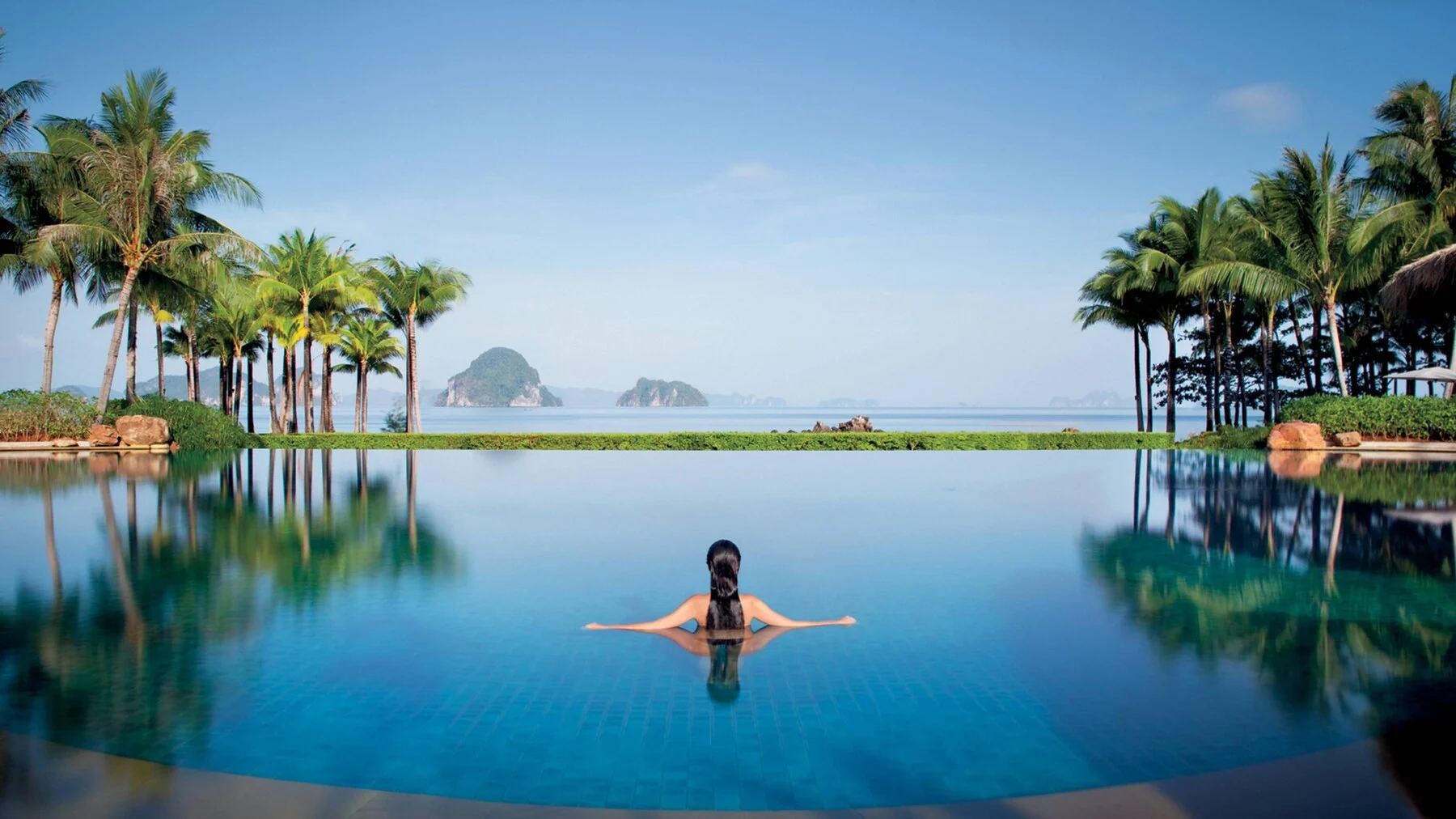
Even the name is built from the setting. Phulay compresses the Thai words for mountain, phukao, and sea, talay — the two things visible from almost every point on the property. The site is bracketed by two national parks, which is the practical reason the view has never been built out.
Why Krabi
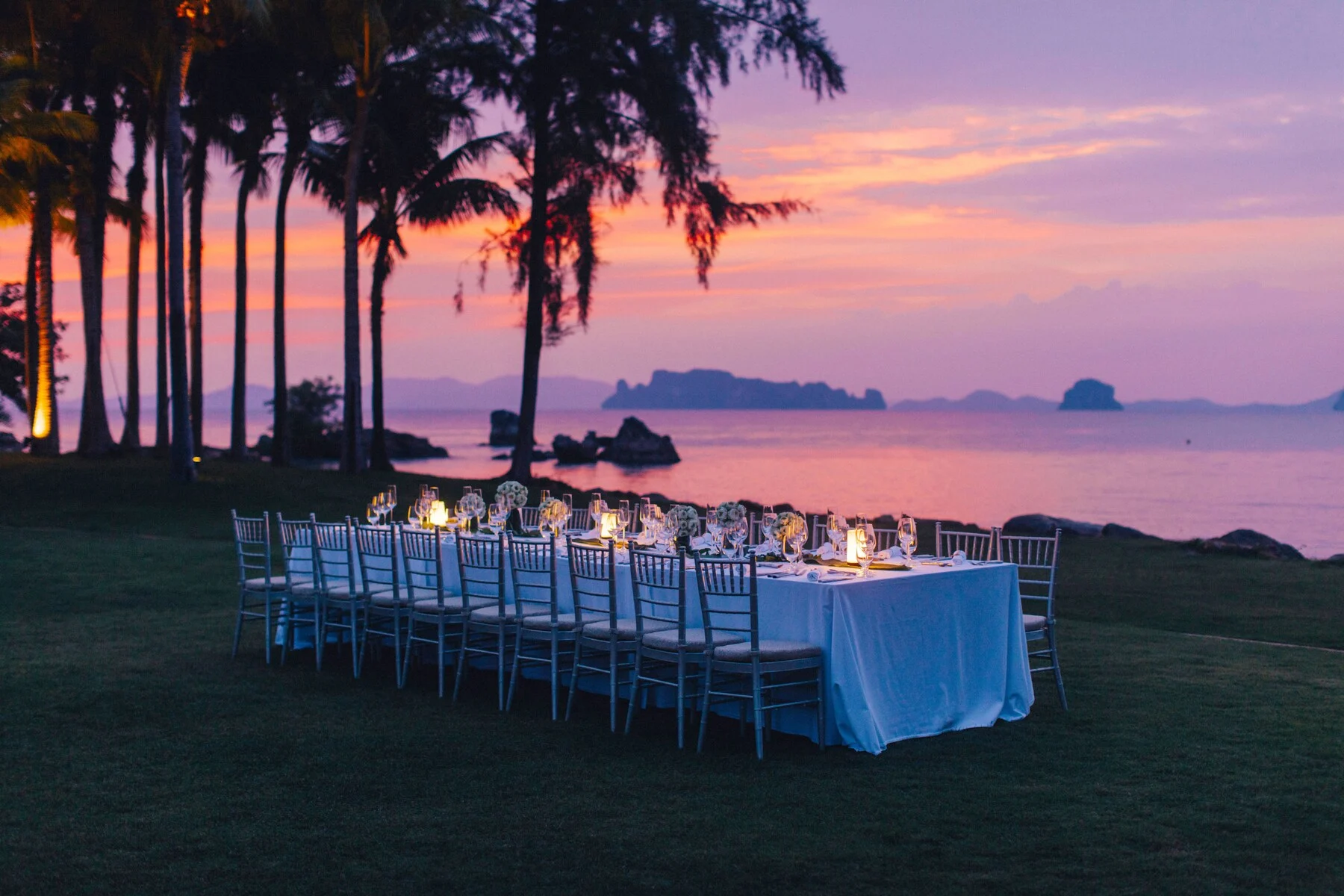
Krabi is the province on the eastern side of Phang Nga Bay, across the water from Phuket, and for most of the twentieth century it was hard to reach. Krabi International Airport opened in 1999 and put Bangkok under ninety minutes away. A year later The Beach arrived in cinemas, filmed a short boat ride down the coast, and a landscape that had been the preserve of climbers and divers became something the wider world could picture.
The result is a province with the geology of a national park and the access of a resort island. If you already know Krabi and Phuket, the easiest way to place Krabi is as the same bay seen from the opposite shore — fewer hotels, taller rock, longer boat rides.
Sixteen years on
Phulay Bay holds a Forbes Travel Guide Four-Star rating and appeared on the guide’s inaugural Edge List in 2025. Its general manager, Vidya Sagar, puts the appeal of the place plainly: guests, he says, do not want to leave — they want to stay forever.
The more interesting legacy is the category itself. Reserve normalised a set of ideas that the rest of the market has since adopted wholesale: villa-only footprints, butler service as standard rather than as an upgrade, architecture that defers to the site, and a deliberate refusal to scale. Every all-villa hillside now opening on Samui or above a Phuket headland is working from a template that was first assembled in Krabi in 2009.
Phulay Bay keeps 54 pavilions and villas on the headland, and rates move sharply between the dry season and the green one. Check dates and rates →
Source: Forbes Travel Guide — The Thai Hotel That Launched a New Category of Luxury Travel. Photographs: Phulay Bay, a Ritz-Carlton Reserve.